Zoning and Permitting Basics in Beaumont, Lumberton, Silsbee and the County
Before you buy a lot, sign a lease or start building in Southeast Texas, you need to know which set of land-use rules applies. The answer depends on where the property is: inside a city with zoning, in a city’s extraterritorial jurisdiction (ETJ), or in unincorporated county land where there is no zoning at all. This guide explains how it works in Beaumont, Lumberton and Silsbee, and what “no zoning” really means in the county.
The big picture: cities zone, counties don’t
In Texas, zoning is a city power. Cities adopt zoning ordinances under Chapter 211 of the Local Government Code. Counties, by contrast, have limited land-use authority that doesn’t include zoning, as the Texas A&M Real Estate Research Center explains. Counties do regulate subdivision platting, floodplain development, septic systems and a list of other specific topics.
Around each city is an ETJ, a band of unincorporated land where the city can apply limited rules (mainly subdivision and platting) but not zoning. Under a 2023 state law (Senate Bill 2038), many landowners can petition to be released from a city’s ETJ. The Research Center notes that the law’s constitutionality has been contested in court, so check its current status for a specific property.
Beaumont
Beaumont has a comprehensive zoning ordinance, Chapter 28 of the city code, first adopted in 1981 (§ 28.01.001). Each property is in a zoning district that lists uses permitted by right. Key points for commercial buyers and tenants:
- Specific use permits (SUPs). Some uses are allowed in a district only with an SUP. The code describes SUPs as a way for City Council to deny or conditionally approve uses that may have unusual characteristics, and a building permit or certificate of occupancy won’t be issued for such a use until the SUP is approved. The process includes a public hearing before the Planning and Zoning Commission and a vote by council. Recent examples include SUP approvals for new commercial centers on North Major Drive.
- Rezoning. If your use isn’t allowed at all, you’d need a zone change, which follows a similar public process and isn’t guaranteed.
- Site plan and permits. Building permit applications must include a site plan. Commercial construction also goes through building, fire and sometimes drainage review.
- Incentive areas. Parts of Beaumont are in Neighborhood Empowerment Zones with possible fee waivers and tax abatements; see the city’s economic development page.
Ask the city’s planning staff for a zoning verification letter if a lender or buyer needs written confirmation of the zoning and whether the current use conforms.
Lumberton
Lumberton has its own zoning ordinance (Chapter 50 of the code of ordinances) and subdivision rules (Chapter 42), both available through the city’s online code. Zoning and permit questions go through City Hall’s Permits & Zoning office, which also posts zoning meeting agendas. Water and sewer in Lumberton are provided by the Lumberton Municipal Utility District, which handles plumbing permits and utility service separately from the city. For commercial projects along US 69 and US 96, coordinate early with both the city and the MUD, and with TxDOT for any driveway on a state highway.
Silsbee
Silsbee adopted zoning districts in its code of ordinances, ranging from single-family residential districts to business districts, and publishes an official zoning map. The code is on Municode. Commercial frontage along US 96 and SH 327 is where most retail and service businesses locate. As always, check the specific parcel; district lines don’t always follow what’s on the ground today.
Unincorporated county land: “no zoning” doesn’t mean no rules
Much of Hardin, Jefferson and Orange counties lies outside any city. There, the county can’t tell you that a lot is “commercial” or “residential,” which gives owners a lot of flexibility. It also means a neighbor can, in principle, put a very different use next door. What still applies:
- Deed restrictions. Private restrictions recorded against the land are often the real land-use control outside cities. They can prohibit commercial use, set minimum home sizes, or bar mobile homes. Your title commitment will list them.
- Subdivision platting. Under Chapter 232 of the Local Government Code, an owner who divides land outside city limits generally must file a plat with the county, subject to exceptions. Hardin County’s subdivision manual, revised in April 2026, sets road, drainage and lot standards.
- Floodplain development permits. Building in a FEMA flood zone requires a permit under the county’s floodplain rules; see Hardin County’s floodplain order.
- Septic permits. On-site sewage systems need a permit under TCEQ rules, usually issued by the county.
- Driveway and drainage permits. TxDOT for state highways; the county or drainage district for county roads and ditches.
- State and federal rules. Wetlands (U.S. Army Corps of Engineers), environmental permits (TCEQ), food permits and alcohol licensing still apply.
A note on Houston-area counties
Houston is the best-known large American city without zoning. The city’s Planning and Development Department notes that development is instead governed by ordinance codes covering subdivision, lot size, building lines and parking, and the city can help enforce certain deed restrictions. Many suburban cities in Montgomery, Fort Bend and Brazoria counties do have zoning, and large master-planned communities rely heavily on private restrictions.
A simple checklist
- Is the parcel inside city limits, in an ETJ, or unincorporated?
- If inside a city: what is the zoning district, and is your use permitted by right, by SUP, or not at all?
- What deed restrictions and easements are recorded against the land?
- Is the property platted? Will your plans require a new plat or replat?
- What is the flood zone, and what elevation will new construction need?
- Who provides water and sewer, or will you need a well and septic?
- Do you need TxDOT or county driveway approval?
Our property map shows city limits and zoning districts for Beaumont, Lumberton, Silsbee and other area cities, in one consistent color scheme, along with flood zones and utility providers. When you find a property you like on our listings page, we can help you confirm the zoning before you commit.
This article is general information, not legal advice. Zoning maps and codes change; confirm current rules with the city or county and consult a qualified attorney about a specific property.
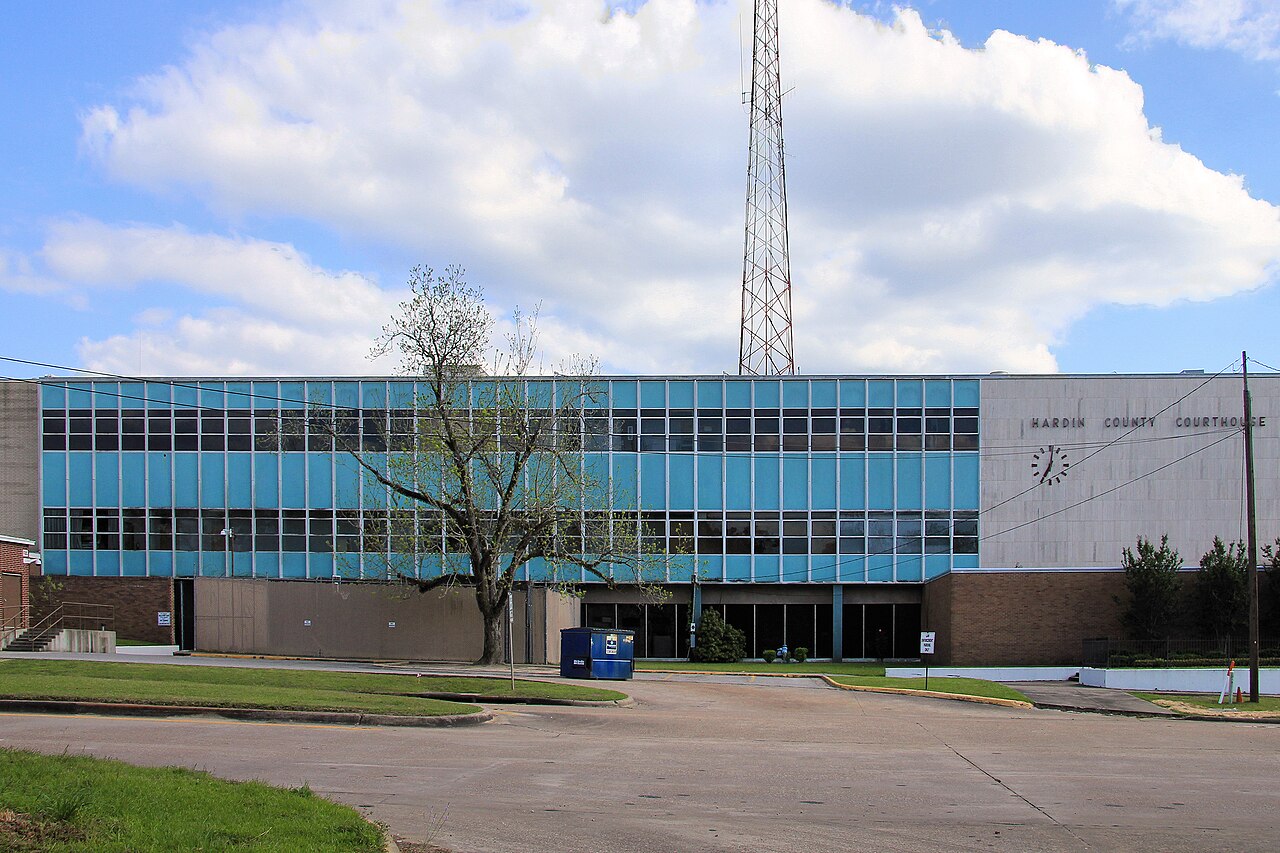
Header photo: Hardin county tx courthouse 2014 by Larry D. Moore, licensed CC BY 4.0, via Wikimedia Commons.