What LNG and Refinery Expansion Mean for Beaumont-Area Real Estate
Southeast Texas is in the middle of one of the largest waves of industrial investment in its history. LNG export terminals, refinery expansions and a new polymers plant are either recently finished or under construction within a short drive of Beaumont. In its 2024 economic report, the Southeast Texas Economic Development Foundation cited more than $41 billion in new investment planned or under construction in the region. Here is what’s actually happening, based on the companies’ own announcements and government sources, and what it does and doesn’t mean for local commercial real estate.
The major projects
Golden Pass LNG (Sabine Pass)
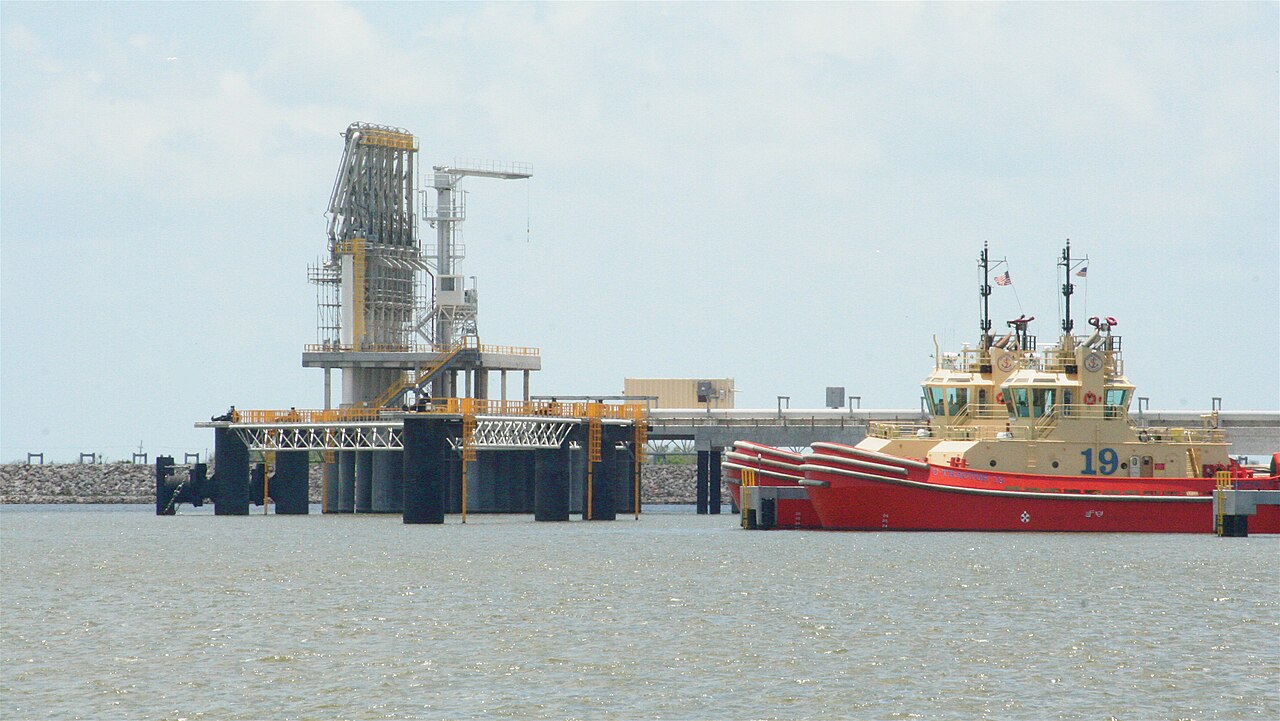
Golden Pass LNG, owned 70% by QatarEnergy and 30% by ExxonMobil, shipped its first export cargo from Train 1 on April 22, 2026, according to the U.S. Energy Information Administration. The project has three liquefaction trains; the developer aims to start Train 2 in the second half of 2026 and Train 3 in the first half of 2027. When complete, EIA expects it to have the third-highest capacity among operating U.S. LNG export terminals.
Port Arthur LNG
Sempra Infrastructure’s Port Arthur LNG is being built in phases. Phase 1, a joint venture with ConocoPhillips, is an approximately $13 billion, two-train project with a nameplate capacity of about 13 million tonnes per year. Bechtel is the construction contractor, and commercial operations are expected at or near the end of 2027 for Train 1 and in 2028 for Train 2. Sempra reached a final investment decision on Phase 2 in September 2025, adding Trains 3 and 4, which Sempra now expects to begin commercial operation in 2030 and 2031. Together, the two phases represent a $25 billion investment with about 26 million tonnes per year of capacity. Sempra is also permitting a possible further expansion, the Port Arthur LNG North project.
Refining: Motiva and ExxonMobil
Motiva’s Port Arthur refinery, owned by Saudi Aramco, is North America’s largest refinery, and in 2025 Bloomberg reported its crude capacity had grown to about 654,000 barrels per day. In Beaumont, ExxonMobil completed a $2 billion expansion in 2023 that added 250,000 barrels per day of capacity, which the company called the largest U.S. refinery expansion in more than a decade.
Golden Triangle Polymers (Orange)
Chevron Phillips Chemical and QatarEnergy are building Golden Triangle Polymers in Orange: an ethane cracker and two high-density polyethylene units with an expected installed cost of $8.5 billion. The project lists startup planned in 2027, roughly 4,500 construction jobs and more than 500 permanent full-time jobs.
What it means for real estate
Construction jobs are large but temporary
Big industrial projects bring thousands of construction workers for a few years, then a much smaller permanent workforce. Golden Triangle Polymers is a good illustration: about 4,500 construction jobs versus 500-plus permanent jobs. That pattern drives short-term demand for RV parks, extended-stay hotels, furnished rentals, restaurants, fuel stations and equipment yards, and that demand fades as projects finish. Investors buying property whose income depends on construction crews should underwrite what happens when the crews leave. With Port Arthur LNG Phase 2 scheduled into 2031, this cycle may run longer than most, but each project still has an end date.
Industrial service and laydown space
Contractors, fabricators, valve and pump shops, scaffolding companies and logistics firms need yards and shop buildings near the plants and along I-10, SH 73, US 69 and the SH 87 corridor. Fenced, stabilized yards with good truck access and a shop building with an overhead crane are consistently in demand during build-outs, and operating plants need maintenance contractors long after construction ends.
Retail and services follow rooftops and paychecks
Permanent plant jobs tend to be well paid, and those employees buy homes and spend locally. Much of that growth shows up in suburban corridors such as north Beaumont, Lumberton, Nederland and Mid-County, Bridge City and Orange, where people choose to live, rather than right next to the plants. Retailers and restaurants are responding: in October 2026 KFDM reported a $29.3 million remodeling and expansion plan for H-E-B’s Dowlen Road store in Beaumont.
Keep the broader numbers in view
Investment headlines and population growth aren’t the same thing. The Census Bureau estimates the Beaumont–Port Arthur metro area at about 399,300 residents in 2025, only modestly above the 2020 census count of about 397,600. Unemployment has also stayed above the state average: the Texas Workforce Commission reported a 5.3% rate for September 2026, down from 5.6% a year earlier. These projects add jobs and tax base, but the region isn’t growing like suburban Houston. Underwriting should reflect steady, not explosive, demand.
Property taxes and local incentives
Large industrial facilities often receive local tax abatements or other incentives, so their full value may not reach local tax rolls right away. When it does, it can help school districts and counties, but it doesn’t automatically lower your tax bill. Check current rates and any planned bond elections with the taxing units that cover a property.
Infrastructure is catching up
TxDOT is rebuilding the I-10/US 69 interchanges in Beaumont as two projects. The Cardinal Drive interchange (started August 2022) and the Eastex interchange (started November 2024) are both scheduled to finish in 2030, according to TxDOT’s project page. Construction disrupts access for businesses along the frontage roads for years, while the finished project should improve traffic flow and evacuation capacity. If you’re buying along these segments, look closely at the construction phasing and how access to the property will change.
Practical takeaways
- Match the property to the demand driver. Plant maintenance and permanent-worker spending last; construction-crew demand doesn’t.
- For industrial yards and shops, truck access, drainage and flood zone matter as much as distance to the plant gate.
- Rely on project schedules from the companies and agencies, not rumors. Dates slip, and phases can be delayed or cancelled.
- For retail and office, follow where employees are actually buying homes.
To look at industrial and commercial sites near these projects, use our property map with the pipeline, power and flood layers, or browse current listings.
This article is general information, not legal, tax or investment advice. Project details come from public company and government sources and can change; verify current information before making decisions.
Header photo: Golden Pass LNG, Sabine Pass by roy.luck, licensed CC BY 2.0, via Wikimedia Commons.